
AI-assisted development produces code fast — but without structure, that code drifts from requirements, violates decisions, and accumulates rework. Outcome Engineering fixes this with a Spec Tree: a git-native product structure where every node co-locates a spec, its tests, and evidence that they match.
The Spec Tree is a durable map of your product. Nothing moves because work is "done" — specs are permanent truth. Status is derived from tests, not labels. Context is deterministic: the tree path defines exactly what an agent sees.
# Install the spx CLI
npm install -g @outcomeeng/spx

# Add the plugin marketplace to Claude Code
claude plugin marketplace add outcomeeng/claude

# Install the Spec Tree plugin
claude plugin install spec-tree@outcomeeng

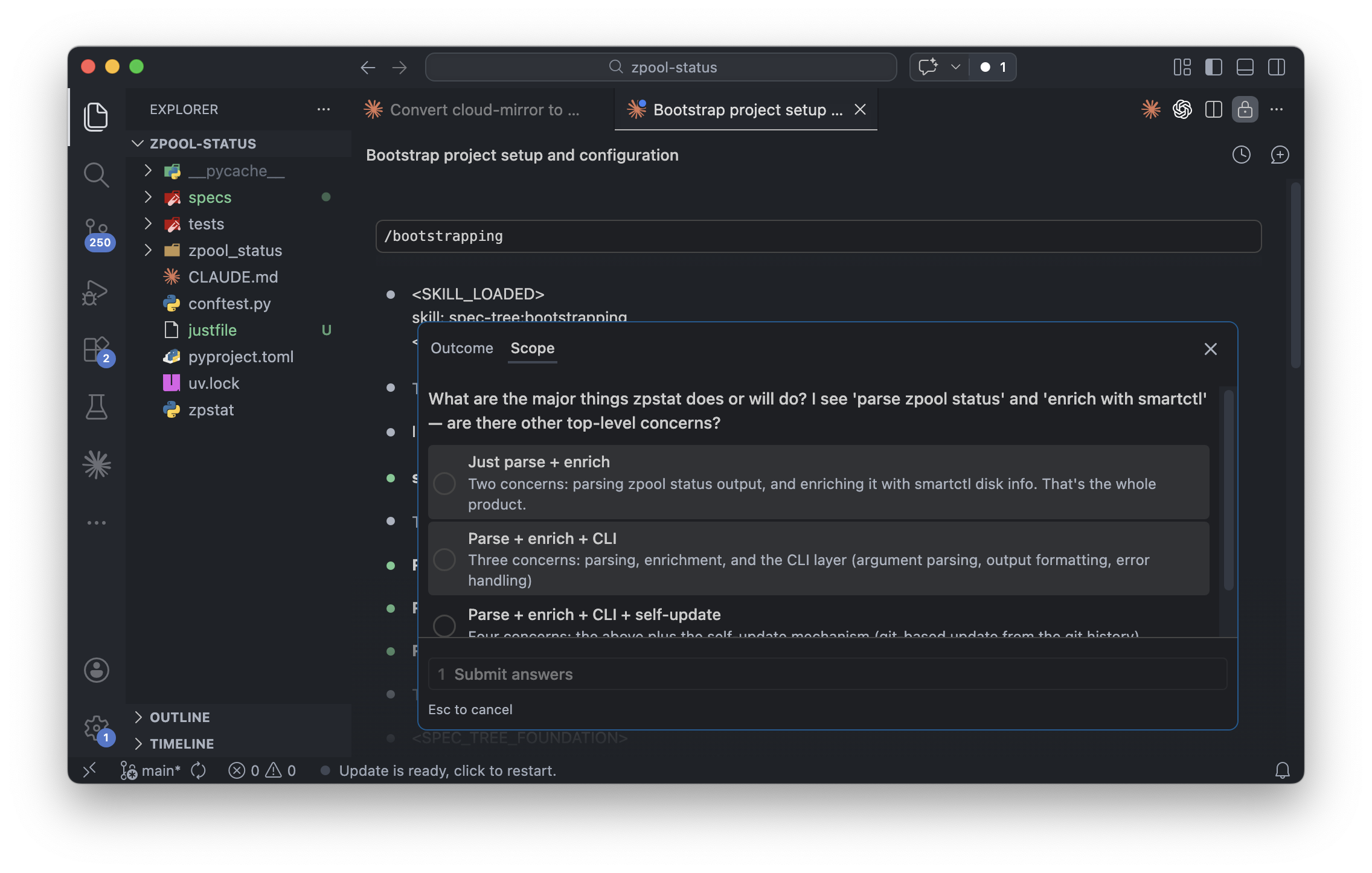
# Bootstrap your first spec tree
> /bootstrap| Repository | Purpose | Install |
|---|---|---|
| spx | Developer tool for spec-driven development | npm install -g @outcomeeng/spx |
| Repository | Purpose | Install |
|---|---|---|
| claude | Plugin marketplace — all plugins below | claude plugin marketplace add outcomeeng/claude |
Individual plugins: claude plugin install spec-tree@outcomeeng, python@outcomeeng, typescript@outcomeeng, prose@outcomeeng, claude@outcomeeng
Skills distributed as standalone repositories, compatible with any agent that supports the Agent Skills open standard.
| Repository | Purpose | Install |
|---|---|---|
| spec-tree | Spec-tree skills for spec-driven development | npx skills add outcomeeng/spec-tree |
| python | Python engineering skills | npx skills add outcomeeng/python |
| typescript | TypeScript engineering skills | npx skills add outcomeeng/typescript |
| foundation | Foundation skills (prose, plugin development, frontend) | npx skills add outcomeeng/foundation |
- outcome.engineering — methodology and documentation
- docs.prompts.ag/guidelines — prompting guidelines